Color PPF: Change Your Car's Color and Protect the Paint at the Same Time
PPF & Wraps
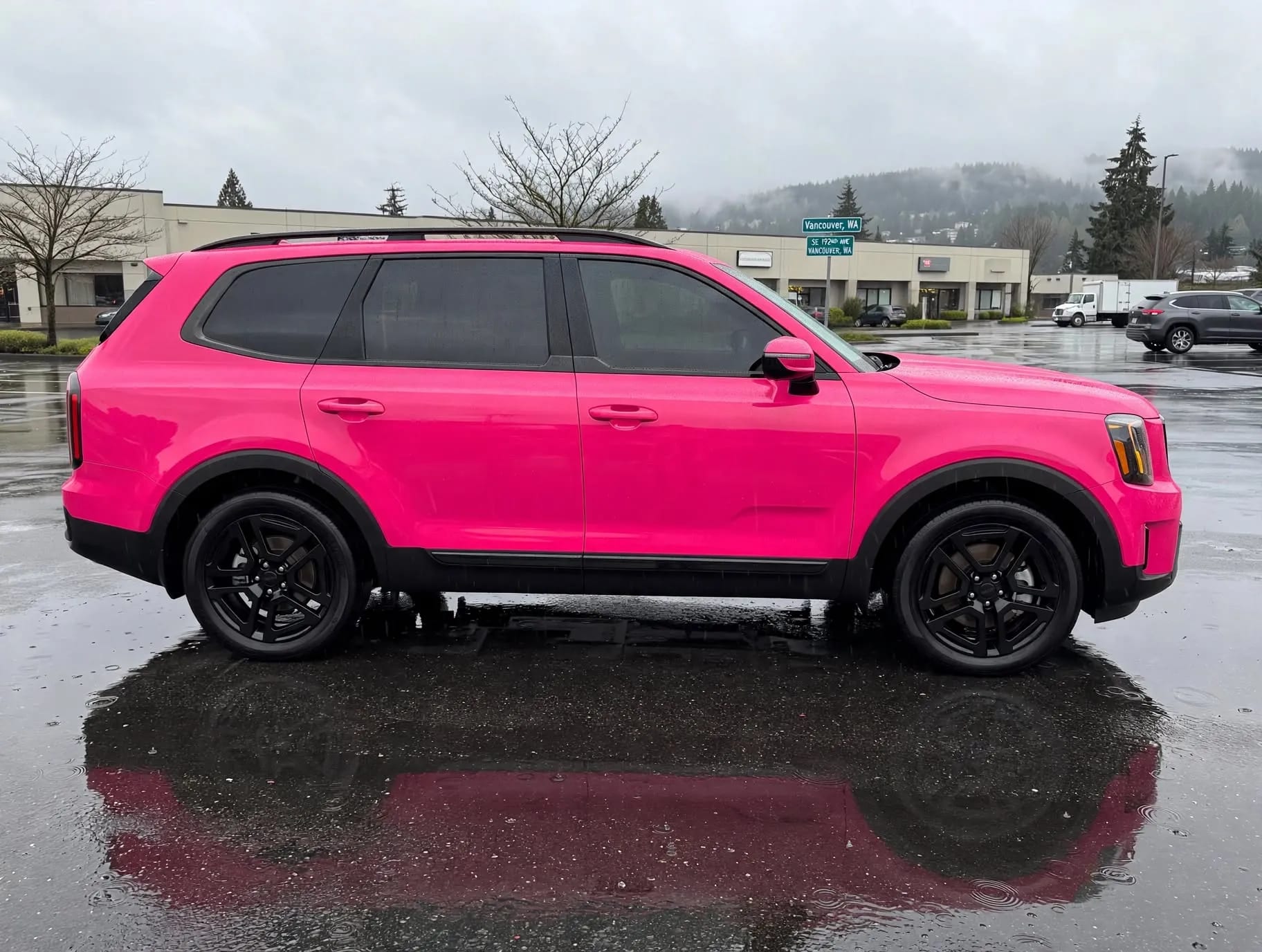
New color without repainting? Color PPF changes your car's look and shields the paint from rock chips. Here's how it compares to vinyl wrap in Vancouver, WA.
For years, if you wanted your car in a different color you had two choices: a respray, or a vinyl wrap. Now there's a third option that a lot of drivers around Vancouver and Portland still haven't heard of: color PPF, also called colored paint protection film.
It does two jobs at once. It changes the color and finish of your car like a wrap does, and it protects the paint underneath like clear PPF does. Here's what it is, how it stacks up against vinyl, and who it actually makes sense for.
What is color PPF, exactly?
Clear paint protection film is a thick, flexible urethane (TPU) layer that's applied over your paint to absorb rock chips, road debris, bug etching, and light scratches. You've probably seen it on the front bumpers and hoods of newer cars. That's "clear bra."
Color PPF is the same protective urethane, with pigment built into the film. So instead of a clear layer over your factory paint, you get a solid color, a satin or matte finish, a color-shift, or even a carbon or forged-carbon pattern, with the same chip-and-scratch protection as clear film.
Most quality color films are self-healing, too. Light swirls and wash marks in the top coat close back up with heat from the sun or warm water. That's not something vinyl can do.
Color PPF vs. vinyl wrap: the real differences
We already compared vinyl wrap vs. paint in an earlier post. Color PPF sits in between the two. Here's how it compares to a traditional wrap.
Thickness and protection. Vinyl wrap film is roughly 3 to 4 mils thick. Color PPF runs about 7 to 8 mils, nearly double. That extra thickness is what stops a rock on I-5 or Hwy 14 from chipping the paint underneath. Vinyl changes the color; it doesn't really protect anything.
Self-healing. Color PPF has a self-healing top coat. Vinyl doesn't. Wash swirls and light scuffs on a wrap are permanent; on color PPF they typically disappear with heat.
Lifespan and warranty. A well-cared-for vinyl wrap in the Pacific Northwest usually lasts 3 to 5 years before fading or edges start lifting. Color PPF is generally rated for 7 to 10 years, and the major film manufacturers back it with warranties against yellowing, cracking, and blistering.
Finish quality. Because PPF is thicker and has a glossier, deeper top coat, gloss color PPF looks more like paint than gloss vinyl does. Satin and matte finishes look excellent in both materials.
Cost. This is the trade-off. Color PPF is the more expensive option, typically 1.5 to 2 times the price of a comparable vinyl wrap, because the material costs more and installation is more demanding. More on pricing below.
Removability. Both come off cleanly when installed on healthy factory paint and removed within their service life, and both preserve the original paint underneath, which is a big deal for resale on a leased or newer vehicle.
Quick comparison:
- Thickness: vinyl 3 to 4 mils, color PPF 7 to 8 mils
- Rock-chip protection: vinyl minimal, color PPF yes
- Self-healing: vinyl no, color PPF yes
- Typical lifespan in the PNW: vinyl 3 to 5 years, color PPF 7 to 10 years
- Finish options: vinyl has the widest range; color PPF now covers gloss, satin, matte, color-shift, and carbon
- Relative cost: vinyl is lower, color PPF is higher
- Reversible and paint-safe: both yes
Why color PPF makes sense in the Pacific Northwest
Our climate is hard on wraps. Nine months of rain, road grit, and gravel kicked up on 205 and the 14 mean a vinyl wrap here takes more abuse than one in a dry climate, and every chip in a wrap is a chip that goes straight through to the paint.
Color PPF handles that abuse the way clear PPF does: it takes the hit so the paint doesn't. And because it's hydrophobic, water and road film sheet off instead of sitting on the surface. In practice, that means fewer washes and less wash-induced swirling, and when it does swirl, the top coat heals itself in the sun.
What color PPF costs in Vancouver, WA
Like clear PPF, color PPF pricing depends on vehicle size, panel complexity, the finish you choose, and how much prep the paint needs first. We broke down clear-film pricing in How Much Does PPF Cost in Vancouver, WA? and color film follows the same logic at a higher material cost.
As a rough frame of reference for a full-vehicle color change on a standard car, vinyl wraps typically run in the $3,000 to $5,500 range nationally, while color PPF typically runs $6,000 to $9,000 or more, with trucks and SUVs at the higher end. A partial color PPF package (hood, fenders, bumper, mirrors, or roof only) often lands between $1,500 and $2,800.
Two things move the price more than anything else. First, the finish: color-shift and carbon patterns cost more than solid gloss or satin. Second, paint condition: PPF is optically clear at the edges and magnifies whatever's underneath, so any existing swirls or defects usually need paint correction before film goes on. Bring the car by and we'll give you an exact number.
Who should choose color PPF (and who shouldn't)
Color PPF is the right call if:
- You want a new color and you care about chip protection, especially if you're a daily driver on the freeway
- You're on a lease or plan to sell in a few years and want the factory paint untouched
- You've had a wrap before and got tired of the edges lifting or the finish scuffing
- You want a satin or matte look that stays that way (matte paint is notoriously hard to maintain; matte PPF isn't)
Stick with a vinyl wrap if:
- Budget is the main constraint and protection isn't a priority
- You want a very specific print, livery, or commercial graphic (vinyl still wins on design flexibility; see our commercial wraps page)
- You like to change colors every couple of years
Consider a respray if the factory paint is already damaged or failing, or you want a color that no film manufacturer makes.
How we install color PPF at AutoSpa 360
Film only looks as good as the surface under it, so we don't skip steps:
- Decontamination wash. We strip wax, iron fallout, and road film so nothing gets trapped under the film.
- Paint correction as needed. We remove swirls and defects so the finished surface is flawless.
- Precision-cut patterns. Panel patterns are plotter-cut for your exact year, make, and model so edges tuck cleanly with minimal knife work on your paint.
- Install and wrap edges. We wrap edges wherever the panel allows so there are no visible seams or lift points.
- Cure and inspect. A final check for lift, contamination, and edge finish before the car goes back to you.
Want to see what a finished color change looks like? Take a look at recent work in our gallery, or read more about our paint protection film and wrap services.
Frequently asked questions
Does color PPF damage the paint when it's removed?
No. When it's installed over healthy factory paint and removed within its service life by a professional, it comes off cleanly and the original paint is intact underneath. That's one of the main reasons people choose film over a respray.
How long does color PPF last?
Most quality color films are rated for 7 to 10 years. In the Pacific Northwest, garaging the car, washing it regularly by hand, and avoiding automatic brush washes will get you to the high end of that range.
Can you put ceramic coating on top of color PPF?
Yes. A coating designed for PPF adds extra gloss, makes the film easier to wash, and helps protect the top coat from UV. We often bundle the two. See our post on PPF vs. ceramic coating for how they work together.
Do I need to notify anyone if I change my car's color?
A color change can affect what's on your registration and how police or your insurer identify the vehicle. Rules and insurer requirements vary, so we recommend checking with the Washington State Department of Licensing and letting your insurance company know once the work is done.
Can I get color PPF on just part of the car?
Absolutely. Roofs, hoods, mirrors, and accent panels in a contrasting satin or carbon finish are popular, and a partial job is a great way to try the look without committing to a full color change.
Is color PPF worth it over vinyl?
If you'd be putting clear PPF on the car anyway, color PPF is almost always worth it. You're getting the color change for the cost difference. If you only want the look and don't care about protection, vinyl is the more affordable route.
Ready to pick a color?
If you're weighing a color change, come by and see the films in person. Colors read very differently on a real panel than on a screen. We serve Vancouver, Camas, Battle Ground, Ridgefield, and the Portland metro.
Call us at (360) 513-6564, or book online and we'll put together a quote for a full or partial color PPF package.